Tina Reed · 1 October 2026
Commuter Travel Data Reveals Effects of Road Improvements on Journey Durations in Outskirts
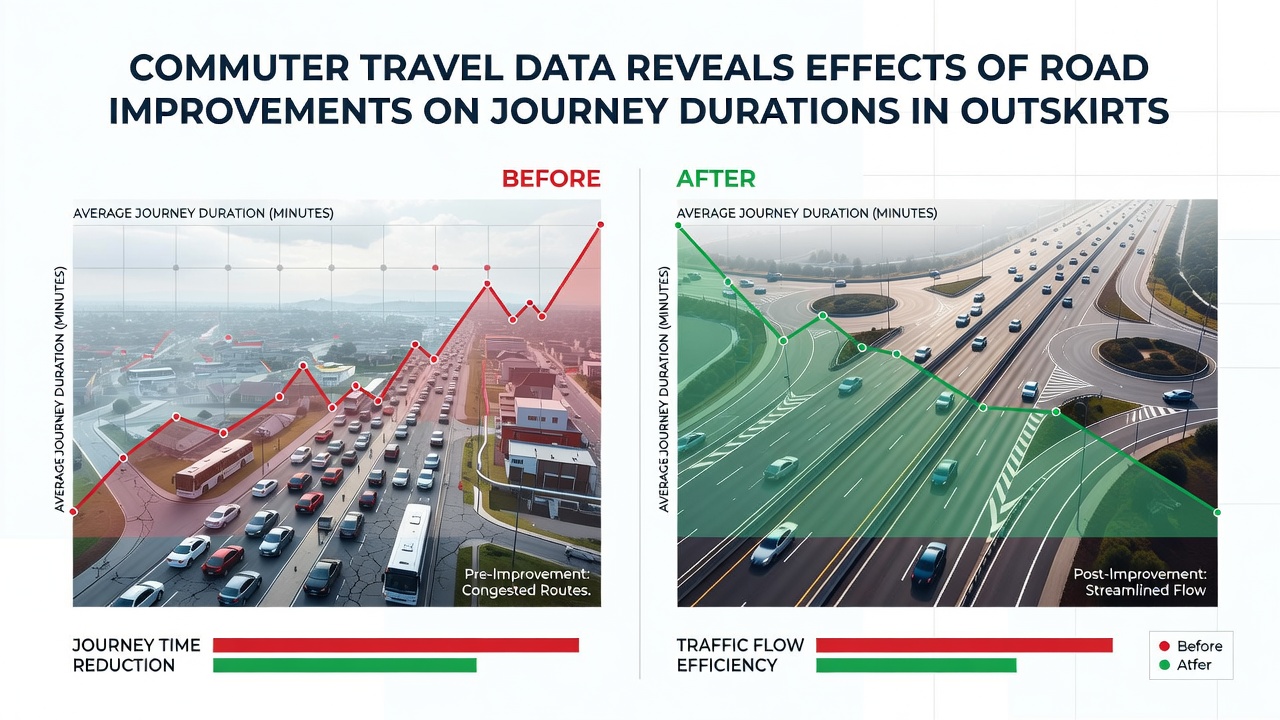
Recent analysis of commuter travel patterns demonstrates measurable changes in journey durations following targeted road improvements across outlying districts, and data collected through electronic sensors along major arterial routes indicates consistent reductions in average travel times during peak periods. Observers note that these upgrades, which included widened lanes, synchronized traffic signals, and additional turning bays at key intersections, produced measurable effects on daily commutes originating from residential zones beyond central urban cores.
Data Collection Methods and Initial Findings
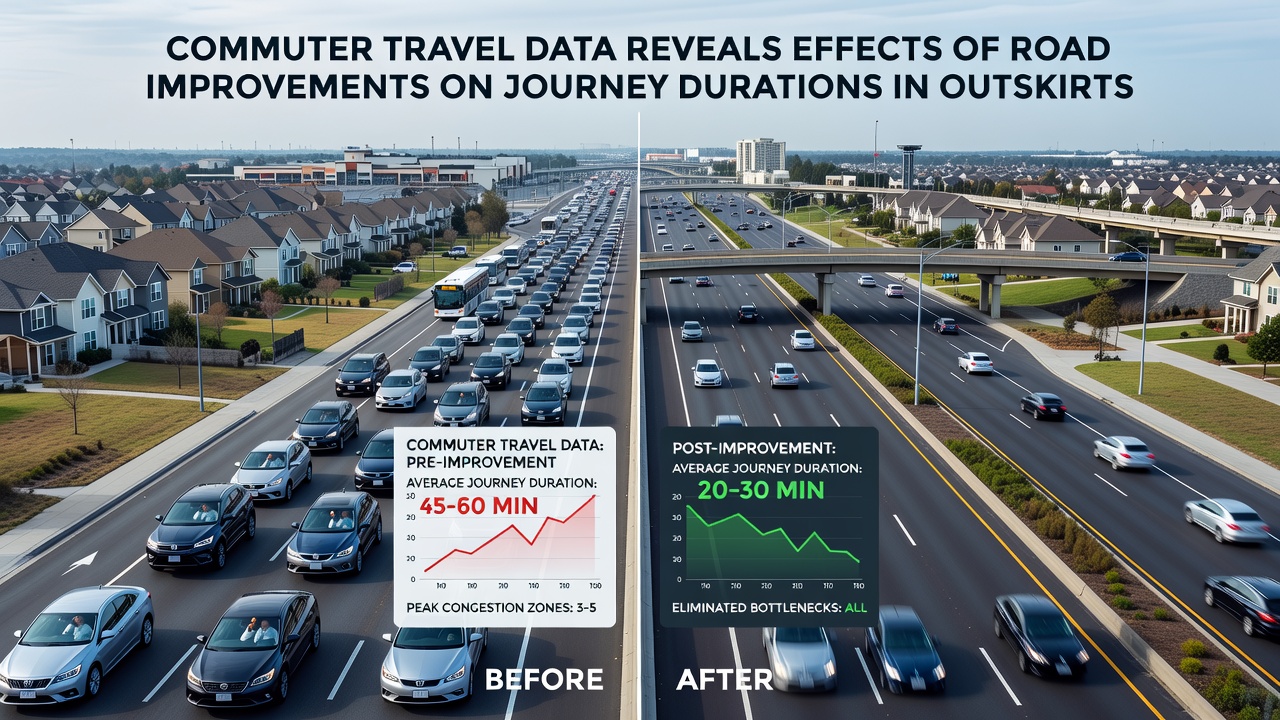
Transport authorities compiled datasets from automated traffic counters and GPS tracking devices installed on public transit vehicles, while private vehicle operators contributed anonymized location data through voluntary mobile applications. Figures released in October 2026 show that average journey times from peripheral neighborhoods to employment centers decreased by 12 to 18 minutes during morning rush hours compared with measurements taken two years earlier, before construction began on the improvement projects. Researchers cross-referenced these results against weather records and school holiday schedules to isolate the impact of physical infrastructure changes from other variables.
One study conducted by regional planning agencies revealed that evening return trips experienced similar benefits, although the magnitude varied depending on the specific route and time of departure. Data indicates that corridors receiving multiple simultaneous upgrades showed the largest gains, whereas segments with only partial modifications displayed more modest improvements.
Geographic Variations Across Outlying Areas
Commuters traveling from northern outskirts recorded the most substantial time savings, with some routes shortening by nearly 25 percent after the addition of dedicated bus lanes and roundabout replacements at former signalized junctions. Southern districts, in contrast, saw smaller but still notable reductions averaging 9 percent, partly because those roads already featured higher capacity before the recent works. Eastern and western approaches displayed intermediate results, and analysts attribute the differences to varying traffic volumes and the original road configurations present in each sector.
Local authorities in collaboration with university researchers examined how these changes influenced modal choices, and preliminary reports suggest a slight uptick in public transport usage on routes where journey reliability improved most noticeably. Freight operators also reported more predictable delivery windows, which in turn affected logistics planning for businesses located in industrial parks on the urban fringe.
Comparative Analysis With National Benchmarks
Comparisons with data from other metropolitan regions provide additional context, according to reports published by the Federal Highway Administration. Similar road enhancement programs in comparable cities produced time savings ranging from 8 to 22 percent, depending on the scale of investment and existing congestion levels. Australian transport studies available through the Department of Infrastructure further illustrate that integrated signal coordination combined with capacity additions tends to yield the strongest outcomes for journeys exceeding 15 kilometers.
Those examining the datasets observe that secondary effects emerged beyond direct time reductions, including lower fuel consumption estimates derived from engine telemetry and reduced idling at intersections. Air quality monitoring stations positioned near upgraded corridors recorded modest declines in certain pollutant concentrations during peak hours, although researchers emphasize that multiple factors contribute to such measurements.
Longer-Term Monitoring and Future Projections
Continued data collection remains underway to determine whether initial gains persist as traffic volumes adjust to the new road capacities. Some planners anticipate that suppressed demand may eventually offset portions of the time savings if additional development occurs along the improved corridors. Modeling exercises project that further enhancements, such as intelligent traffic management systems, could extend benefits into the next decade if implemented alongside ongoing maintenance schedules.
Conclusion
Overall, the commuter travel data underscores the direct relationship between specific infrastructure interventions and measurable changes in journey durations across outlying areas, while highlighting the importance of sustained monitoring to capture evolving patterns. Additional analyses scheduled for release in coming quarters will refine understanding of these dynamics across different seasons and economic conditions.